Home › Commercial Asphalt Resurfacing & Overlays
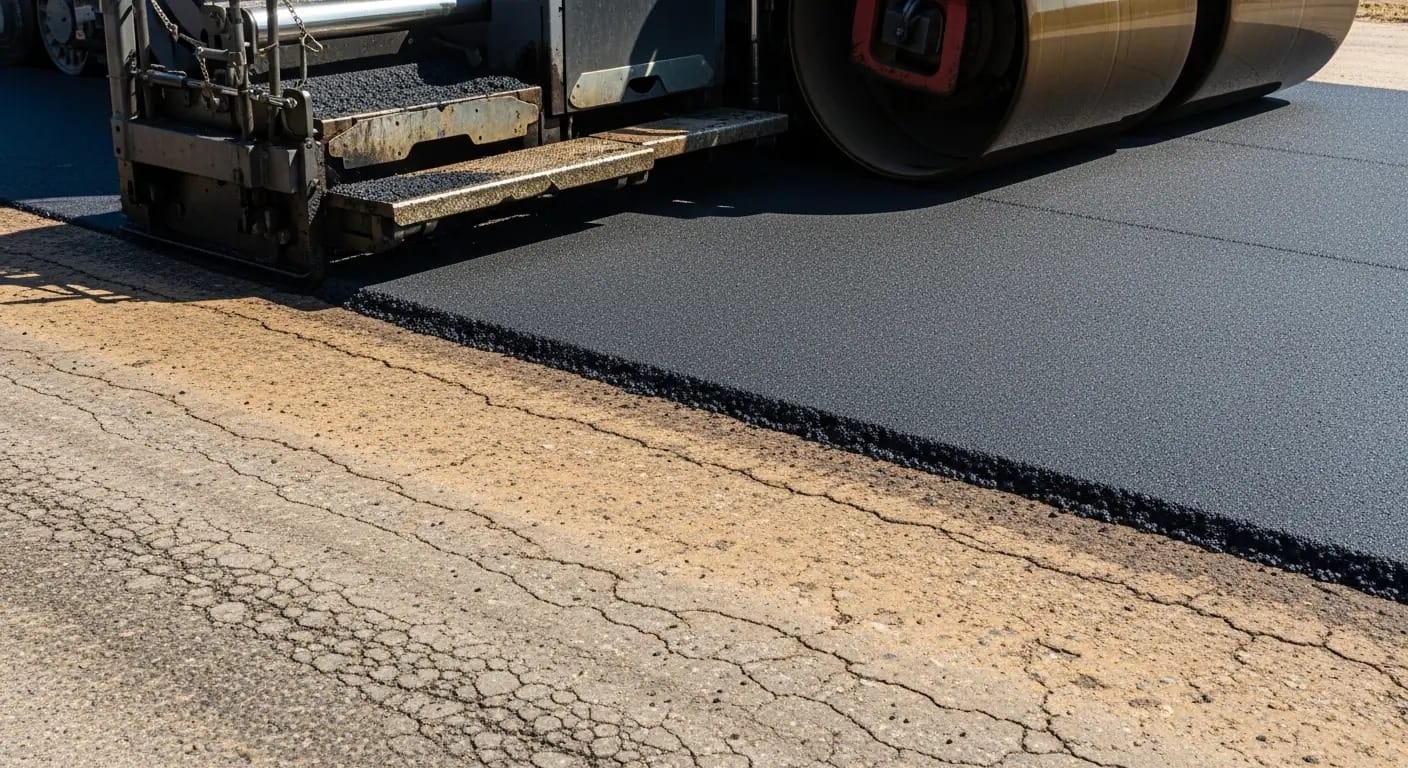
Our commercial asphalt resurfacing in Saint Louis, MO renews worn parking lots and drive lanes without full reconstruction when the base is still in good condition. We mill or level problem areas, repair damage, and place a new asphalt layer that dramatically improves appearance and performance. Overlays are a cost effective way to extend pavement life at busy properties.
Precision Asphalt St. Louis provides professional commercial asphalt resurfacing throughout Saint Louis, MO, Missouri and the surrounding area. Our licensed, insured crew delivers safe, clean, on-time work with a free estimate before anything begins. Call (314) 333-7779 or request your free quote.
Commercial Asphalt Resurfacing for Saint Louis Properties
Commercial asphalt resurfacing is often the most cost-effective way to restore a worn parking lot or drive lane without tearing everything out. Precision Asphalt St. Louis focuses on commercial properties across the greater Saint Louis, Missouri area, from small office lots in Maplewood to large retail centers near I-270.
Resurfacing and overlays involve installing a new asphalt layer over your existing pavement after problem areas are repaired. It is ideal when your lot has widespread cracking, surface raveling, or ponding, but the underlying base is still structurally sound. Compared to full-depth replacement, resurfacing usually costs less, can be completed faster, and lets you keep your business accessible with planned phasing.
On this page, we explain what actually happens during commercial asphalt resurfacing, what affects cost, and how Saint Louis weather and local conditions influence timing and material choices, so you can make a confident decision for your property.
Site Evaluation and When Resurfacing Is the Right Choice
Before we suggest a commercial asphalt resurfacing or overlay, Precision Asphalt St. Louis completes a detailed on-site evaluation. We walk the entire lot, mark settlement areas, check drainage patterns after recent rain, and core or probe the pavement in select locations to understand asphalt thickness and base conditions.
Resurfacing is typically a good fit if you see:
• Alligator or block cracking across large areas, but the pavement does not pump water or move when heavy trucks pass.
• Surface ruts from turning movements in drive lanes, but no major base failure.
• Frequent potholes that seem to reappear in the same general areas, yet the majority of the lot still supports traffic.
We usually recommend against an overlay if the base is saturated, if there is extensive heaving from poor subgrade, or if the asphalt has already been overlaid multiple times. In those cases, full-depth reclamation or reconstruction will last longer and ultimately cost less over the life of the pavement. We always show property managers the specific areas that disqualify a simple overlay so the choice is based on visible evidence, not guesswork.
Step-by-Step: How Commercial Asphalt Resurfacing & Overlays Are Performed
Commercial asphalt resurfacing in Saint Louis typically follows a clear, predictable process so your operations can keep running.
1. Layout, safety, and phasing plan
We start by mapping traffic flow, customer entrances, delivery routes, and fire lanes. Together with your team, Precision Asphalt St. Louis builds a phasing plan that keeps essential access open. Barricades, cones, and signage are placed in advance so tenants and customers know which areas are closed on which days.
2. Milling and surface preparation
We use cold milling machines to remove a controlled depth of existing asphalt, commonly 1 to 2 inches, in drive lanes and parking bays. Around curb lines, drains, and sidewalks, we mill deeper or feather edges so the final overlay ties in flush and does not create trip edges. Milling also roughens the surface, which helps the new asphalt bond. All loose debris is swept and blown off to expose a clean, dry surface.
3. Structural repairs and patching
Before any new asphalt goes down, we cut out failed areas that show pumping, severe rutting, or subgrade movement. These sections are excavated, the base is compacted or replaced, and new base asphalt is installed. Skipping this step is the main reason cheap overlays fail early, so we document and mark each repair area in advance for owner approval.
4. Tack coat application
A uniform tack coat is sprayed across the milled surface. This thin emulsion layer is what bonds the overlay to the existing pavement. In high-traffic Saint Louis commercial sites, we do not spot tack only. Instead, we apply full-coverage tack to prevent slippage or shoving of the new layer when trucks or buses brake and turn.
5. New asphalt overlay installation
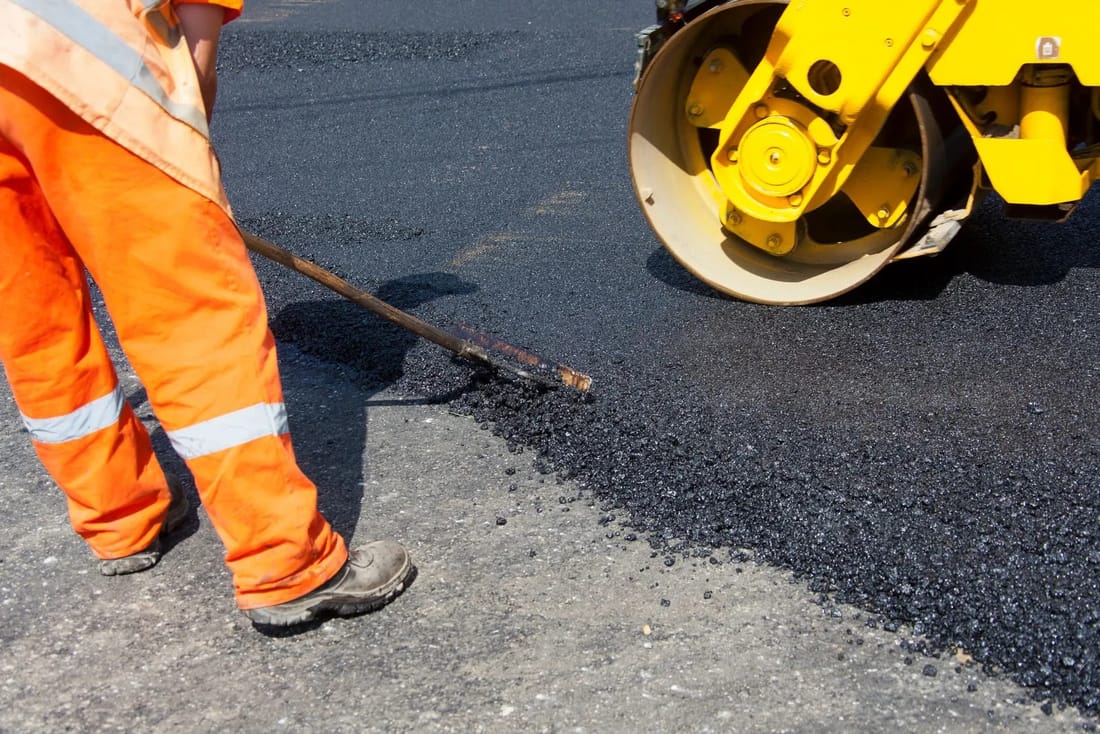
Hot mix asphalt is delivered from local Saint Louis plants, then placed with a paver in controlled passes. Typical commercial overlays range from 1.5 to 3 inches thick, depending on traffic loading and how much we milled off. Our crews use steel-wheel and pneumatic rollers to achieve proper density and a smooth, consistent surface that drains correctly.
6. Final detailing, striping, and cleanup
Once the overlay has cooled enough for traffic, we re-stripe stalls, ADA spaces, crosswalks, and fire lanes. We can also reconfigure layouts for better traffic flow if you choose. All milling debris is hauled away and the site is left clean so your business looks finished, not like a construction zone.
Material Options and Design Choices for High-Traffic Commercial Lots
Different commercial properties in Saint Louis have different demands, so we tailor each commercial asphalt resurfacing project around real-world use instead of a one-size mix.
For shopping centers and medical offices, we usually recommend a standard or moderately modified hot mix surface that balances durability with smoothness. These lots see frequent turning and stop-and-go traffic, so the mix is designed to resist raveling and rutting near entrances.
For industrial parks, loading docks, or bus routes, Precision Asphalt St. Louis often specifies a heavier duty overlay. That may mean slightly thicker lifts, stiffer binders, or a different aggregate blend that stands up to slow heavy axles. In some cases, we use a leveling course first to correct deep ruts before placing the final wearing course.
We also pay close attention to slope and drainage. During milling and paving, we adjust grades so water does not sit in front of doors or in wheel paths. Even a quarter-inch of standing water can accelerate cracking when it freezes. On large lots, we may recommend modifying or adding drains before overlaying, since it is far easier to fix drainage issues before the new surface goes down.
For property owners who want a darker, more uniform appearance, we discuss how an overlay will look compared to patchwork repairs. If you are planning to sell or refinance a property, a fresh overlay and new markings often improve curb appeal and perceived property value.
How Saint Louis Weather and Seasonality Affect Resurfacing
Saint Louis has hot, humid summers and freeze-thaw cycles in winter, and both strongly influence how and when commercial asphalt resurfacing should be done.
We typically schedule overlays from late spring through early fall. Asphalt must be placed at a specific temperature range and compacted before it cools. On cold or windy days, the material cools too quickly, leading to poor density and shorter life. In peak summer heat, we adjust rolling patterns and sometimes shift work times earlier in the day to avoid scuffing from vehicle turning while the surface is still tender.
Freeze-thaw cycles cause existing cracks to widen and let water travel into the base. When we evaluate your lot in late winter or early spring, we pay attention to where water lingers after snowmelt. These spots usually need more aggressive milling, drainage adjustments, or base repair before an overlay is installed.
Deicing salts and plow blades are also part of the Saint Louis reality. During design, we consider how plow trucks will turn and push snow. In some areas, we may slightly increase overlay thickness or adjust joint locations to reduce the chance of plow damage and edge raveling.
Planning ahead helps. Many of our commercial clients contact Precision Asphalt St. Louis in late winter to get on the schedule so the work is done between their own busy seasons, for example, before back-to-school or holiday shopping.
What Drives the Cost of Commercial Asphalt Resurfacing
Property owners often want to know why one quote for commercial asphalt resurfacing is very different from another. The main cost drivers are straightforward, and understanding them helps you compare proposals fairly.
1. Milling and overlay thickness
The more material we mill and replace, the higher the cost, but also the longer the expected life. A 1-inch skim overlay might look good for a couple of years, but it rarely stands up to heavier commercial use. Precision Asphalt St. Louis explains the exact milling depth and overlay thickness on each part of your lot and why those numbers were chosen.
2. Base repairs and patching
Cut-out and replacement of failed areas is labor and material intensive, but skipping this step can cut pavement life in half. Good estimates clearly state how many square feet of base repair are included and what will happen if field conditions reveal more damage.
3. Traffic control and phasing
A simple single-phase overlay on an empty lot costs less to manage than a busy retail center that requires night work, weekend mobilizations, or multiple small phases to keep businesses open. Complex phasing adds to labor and time, so it is important to plan it together.
4. Access, layout, and site features
Tight entrances, steep grades, limited staging areas, or many islands and curbs all add complexity. Working around cart corrals, dumpsters, or loading docks can slow production. We account for those realities in our pricing rather than surprising you with change orders.
5. Striping and accessibility upgrades
If you are refreshing striping only, costs are straightforward. If you also need ADA layout updates, additional signage, or concrete work at ramps to stay compliant, those items are broken out clearly in our proposals.
Transparent pricing lets you see where your money is going and what kind of service life to expect instead of gambling on the lowest number with missing details.
What to Expect When You Hire Precision Asphalt St. Louis
Commercial clients in Saint Louis want resurfacing work that is predictable, safe, and minimally disruptive. Precision Asphalt St. Louis has built our process around those priorities.
Before work begins, you receive a written phasing plan and schedule so you can notify tenants and customers. We coordinate with property managers and facility staff about trash pickup, deliveries, and peak traffic times so those activities are considered in the plan.
During construction, you have a single point of contact who can make on-the-spot decisions about minor adjustments, such as shifting barricades, expanding a patch area, or altering the sequence of phases if weather changes. We know commercial projects often require quick decisions to keep businesses operating smoothly.
After paving and striping are complete, we perform a final walk-through with you. We review drainage, seam quality, and elevations around drains and entry points. If we see minor touch-ups that need attention, such as adjusting a raised utility lid or tightening a striping line, we schedule them promptly.
We also provide simple maintenance guidance specific to your new overlay, such as when heavy trucks can return, how long to avoid tight turning on hot days, and when to consider sealcoating. For many Saint Louis commercial properties, a well-designed and properly installed overlay can extend pavement life by 8 to 15 years, especially when routine maintenance is handled on a reasonable schedule.