Home › Asphalt Pathways, Sidewalks, and Trails
We provide asphalt pathway paving in Saint Louis, MO for parks, schools, campuses, and communities. Our team designs and installs multi use paths, walking trails, and asphalt sidewalks that are smooth, accessible, and low maintenance. Curved layouts, intersections, and connections are carefully built to keep pedestrians and cyclists comfortable and safe.
Precision Asphalt St. Louis provides professional asphalt pathway paving throughout Saint Louis, MO, Missouri and the surrounding area. Our licensed, insured crew delivers safe, clean, on-time work with a free estimate before anything begins. Call (314) 333-7779 or request your free quote.
Asphalt Pathways, Sidewalks, and Trails in Saint Louis, MO
Asphalt pathways and sidewalks are not just narrow drive lanes. In Saint Louis they have to handle freeze-thaw cycles, tree roots, foot traffic, bikes, and in many cases light maintenance vehicles. Precision Asphalt St. Louis focuses specifically on how asphalt behaves in our local soil and climate, so your path holds its shape and drains correctly instead of cracking and puddling within a couple of winters.
We build and repair asphalt pathways, sidewalks, and trails for residential properties, HOAs, apartment communities, schools, churches, parks, and commercial campuses across the greater Saint Louis area. That includes backyard walkways, connector paths between buildings, perimeter walking loops, greenway style trails, and ADA-accessible routes from parking lots to entries.
When you contact Precision Asphalt St. Louis, we look at where the path will sit, who will use it, and what will be running under and around it (utilities, irrigation, tree lines). This first look determines most of the cost and longevity. A straight 4 foot sidewalk with shallow excavation is very different from a winding 8 foot shared-use trail with multiple tie-ins, and we lay out those differences clearly before any work starts.
How We Design Asphalt Pathways for Saint Louis Conditions
Design is where a lot of pathway projects fail. People copy driveway specs or use generic sidewalk details that do not match the site. Precision Asphalt St. Louis starts with slope and drainage. For Saint Louis, we aim for enough cross slope to shed water (typically around 2 percent) without creating a walking hazard or ADA issue. We look at where downspouts discharge, where snow is usually piled, and how surrounding turf drains after a storm.
Subgrade evaluation is next. In many Saint Louis neighborhoods, native clay holds water and expands. In some newer subdivisions, there is fill soil over utilities. We probe and test the base to decide if we need geotextile fabric, additional rock depth, or undercutting of soft spots. For heavily shaded or tree lined routes, we consider future root growth and may adjust alignment or add a thicker aggregate base on the root side to resist heaving.
Width and thickness are chosen based on use. A basic residential footpath might be 4 feet wide with 2 inches of compacted asphalt over 4 to 6 inches of rock. A shared-use trail for bikes and golf carts might be 8 to 10 feet wide with 3 inches of asphalt in two lifts over 8 inches of rock. Precision Asphalt St. Louis explains these options and their costs so you can pick what fits your actual use instead of a generic spec.
Our Step-by-Step Asphalt Pathway Paving Process
For new asphalt pathways and sidewalks in Saint Louis, Precision Asphalt St. Louis follows a sequence that keeps the surface smooth and stable.
1. Layout and marking. We paint the path alignment, check grades with a laser, and call in utility locates. For HOA and park projects, we walk the route with your manager or board representative to confirm exact tie-in points to parking lots, patios, or existing sidewalks.
2. Excavation and subgrade prep. We strip sod and organic material, then excavate to the required depth. Soft or pumping areas are undercut and replaced with compactable material. If the soil is particularly wet or clay-heavy, we may add a separation fabric before the rock goes down.
3. Aggregate base installation. We place compacted rock (often 3/4 inch minus) in controlled lifts. The base is brought to line and grade, with careful attention at transitions like driveway crossings and curb cuts. A solid, well-compacted base is the main defense against future dips and cracks.
4. Forming and edge control. For curved or narrow pathways, we use forms or edge restraints to hold shape. In landscaped areas, we may recommend a slight shoulder of compacted fines so that turf can grow up to the edge without undermining it.
5. Asphalt placement. We install hot mix asphalt at the specified thickness, typically in a single lift for light-use paths and in two lifts for heavier traffic. Where possible, we use a small paver for consistent thickness and smoothness. Tight or confined areas are placed by hand with careful raking and rolling.
6. Compaction and finishing. Rollers compact the asphalt to achieve a dense surface and tight edges. We hand tamp edges where machines cannot reach. At tie-ins, we feather or mill existing surfaces so there is no trip lip.
7. Clean-up and walk-through. We clear the site, sweep adjacent pavements, and walk the route with you to confirm details like drain points, access points, and restoration areas.
Material Options, Thicknesses, and Edge Treatments
Not every Saint Louis pathway needs the same mix or thickness. Precision Asphalt St. Louis uses different asphalt mixes depending on how the path will be used and what the weather exposure looks like.
For light pedestrian sidewalks near buildings, a fine surface mix provides a smoother finish that is easier for rolling carts, strollers, and mobility devices. For trails that will see bicycles or the occasional maintenance vehicle, a mix with slightly larger aggregate resists scuffing and rutting. On shaded trails where ice is common, we pay attention to texture so the surface is not overly slick.
Thickness is driven by use and soil conditions. Most residential walkways work well with 2 inches of compacted asphalt. HOAs and campuses that expect golf carts, Gators, or small plow trucks often opt for 2.5 to 3 inches. In low-lying or problem areas, we prefer to build strength in the rock base rather than simply add more asphalt, which can still settle if the subgrade is weak.
Edge treatment matters for appearance and durability. In turf areas, a flush edge lets grass grow up to the pavement but needs a firm base shoulder to prevent edge cracking. Where landscaping rock or mulch borders the path, we may slightly raise the asphalt so water drains off instead of trapping moisture at the edge. At street or parking lot ties, we saw-cut and butt-joint the new asphalt to the old so there is no visible bump.
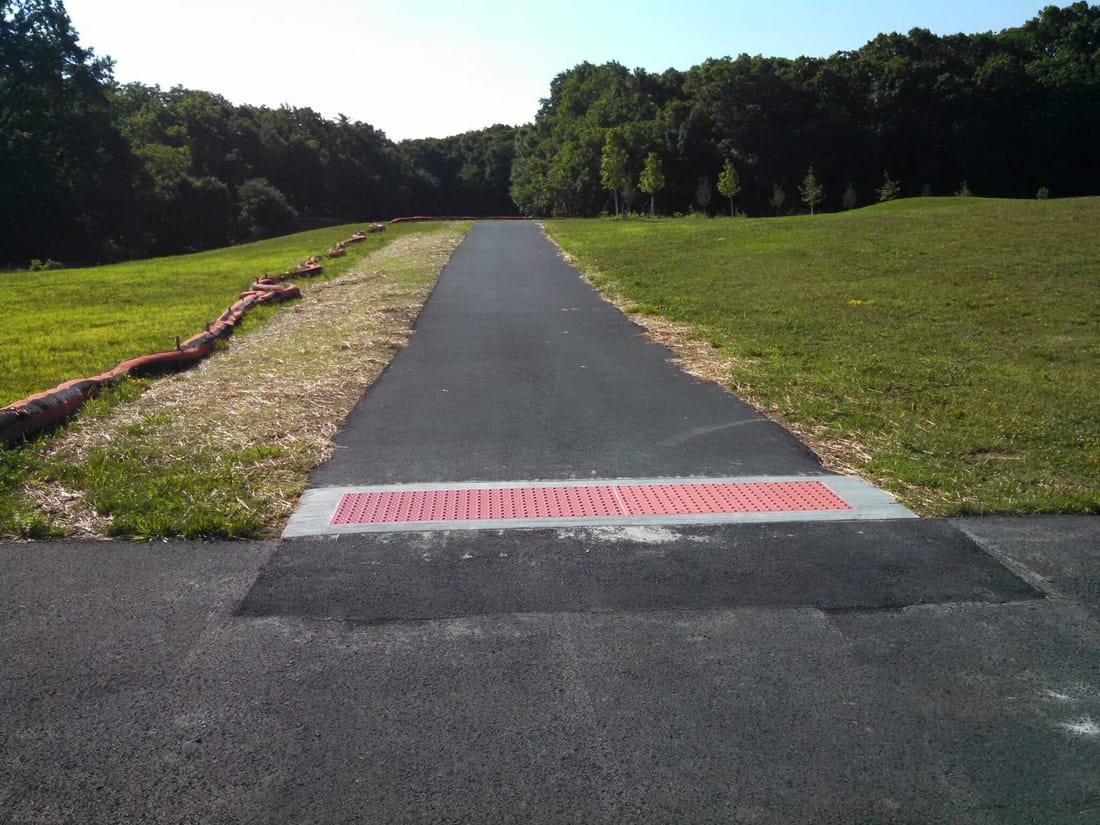
For customers concerned with accessibility, we can add broomed or textured transitions at ramps and crossings that meet current ADA slope and detectability guidelines without creating obstacles for wheelchairs or walkers.
What Drives Cost and Common Issues We Solve Locally
Asphalt pathway paving costs in Saint Louis vary more by site conditions and layout than by simple square footage. Precision Asphalt St. Louis walks you through the main drivers so there are fewer surprises.
Key cost factors include access (can machines reach the area or is everything hand work), total length and width, required excavation depth, rock base thickness, and the number of tie-ins or crossings. Curved or meandering routes through trees may need extra hand grading and root mitigation. Projects near homes or sensitive landscaping might require more careful removal and restoration work.
Local issues we see often include ponding water along building foundations, heaving at tree roots, and cracked or sunk sections where old fill was never compacted. When we replace or extend existing asphalt sidewalks, we look for the reason the old section failed before we match it. For example, in several Saint Louis subdivisions, we have removed narrow sections that sat in the path of downspout discharge, then rebuilt with corrected slope and a deeper base so the same problem does not repeat.
Winter and deicing habits also matter. Heavy use of rock salt combined with poor drainage can accelerate surface wear. We advise on appropriate deicers for asphalt and may recommend slightly richer surface mixes or sealcoating schedules in high salt areas like school entry routes and medical office walks.
Maintenance, Repairs, and When Replacement Makes Sense
A new asphalt pathway or sidewalk should not need major attention for several years if it is built correctly, but some simple maintenance extends its life. Precision Asphalt St. Louis typically recommends regular sweeping to keep grit off the surface, prompt removal of standing leaves and debris, and periodic edge trimming so grass does not creep under and lift the edges.
For hairline cracks that appear over time, especially after a few Saint Louis winters, targeted crack sealing prevents water from reaching the base. Where roots start to push up small sections, we can sometimes mill and patch localized areas while trimming or bridging roots. If rutting or sinking appears at a crossing or tie-in, a more structural patch with base repair might be needed.
We are straightforward about when repair is no longer cost effective. If a pathway has widespread alligator cracking, repeated freeze-thaw damage, or multiple patches over a weak base, full reconstruction with proper subgrade work is usually the better long-term solution. In those cases, Precision Asphalt St. Louis can phase the project so parts of your network stay open while others are rebuilt.
For HOAs, schools, and commercial campuses, we can set up a simple pathway and sidewalk assessment schedule. Every year or two we walk the routes, flag safety issues like trip hazards or abrupt level changes, and prioritize repair versus replacement. This approach has helped several local properties keep their pedestrian routes in good condition without surprise capital expenses.